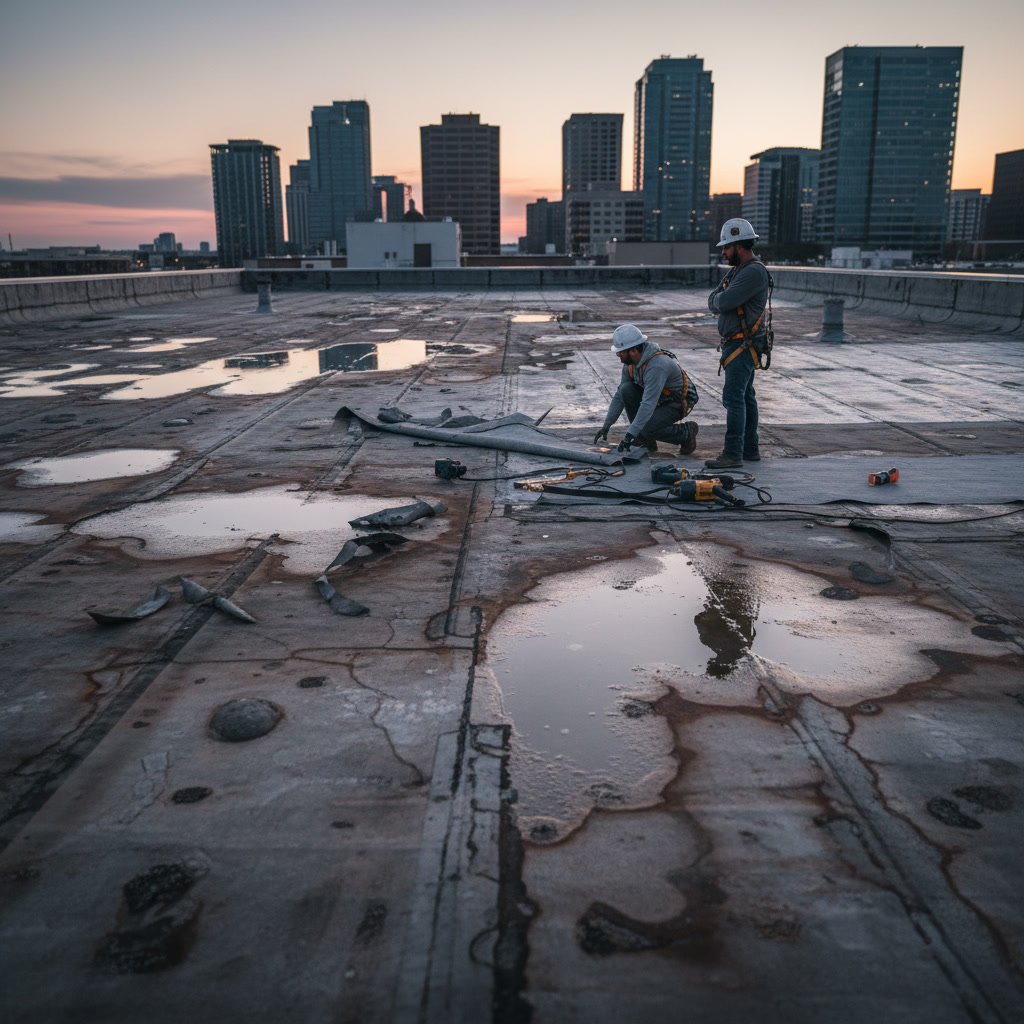
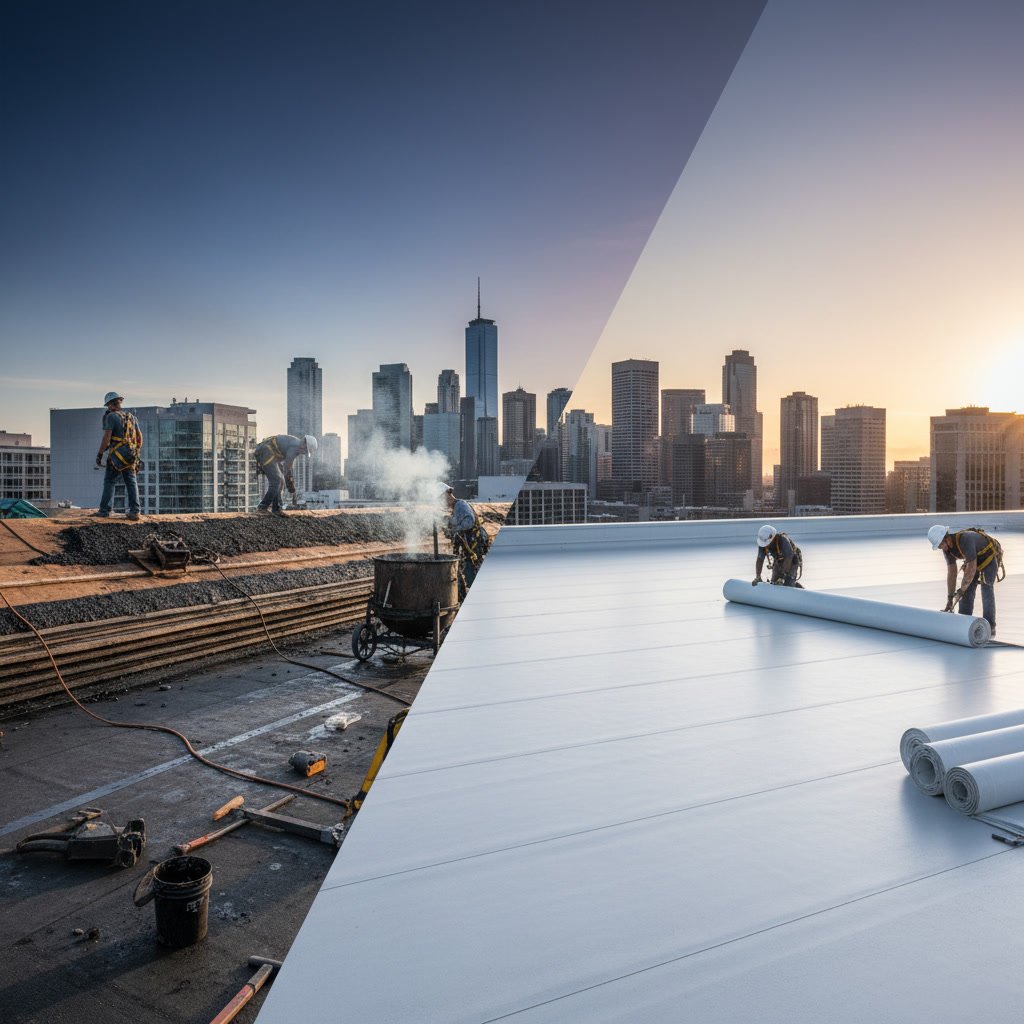
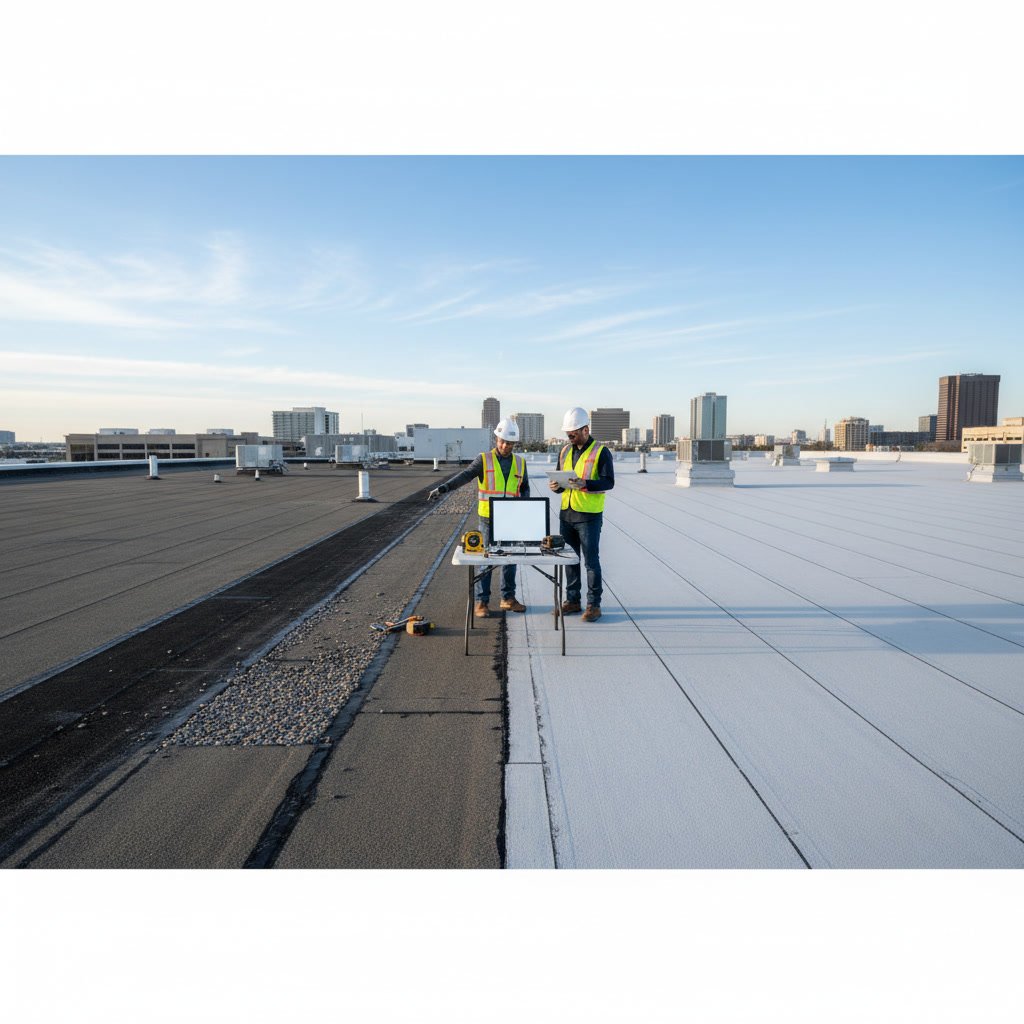
Built up roofing systems use multiple layers of bitumen and reinforcing fabrics to create a durable surface, while single ply membranes rely on a single sheet of synthetic material like TPO or EPDM. The choice between built up roofing vs single ply depends on your building’s structural capacity, budget timeline, expected lifespan, and maintenance resources. Each system offers distinct advantages for different commercial applications, and understanding these differences helps property owners make informed decisions that protect their investment for decades.
The Evolution of Commercial Flat Roof Systems
Commercial flat roofs have evolved significantly over the past century. Built up roofing dominated the market for over 100 years because it provided reliable protection through redundancy. Multiple layers meant that even if one layer failed, others continued protecting the building. This multi-layer approach made sense when labor costs were lower and materials were expensive.
Modern manufacturing changed the equation. Single ply membranes emerged in the 1960s and gained traction in the 1980s as synthetic rubber and thermoplastic technologies improved. These systems promised faster installation, lighter weight, and reduced labor costs. Today, both systems remain viable options for flat roofing projects, each serving different property needs and owner priorities.
Understanding Built Up Roofing Construction
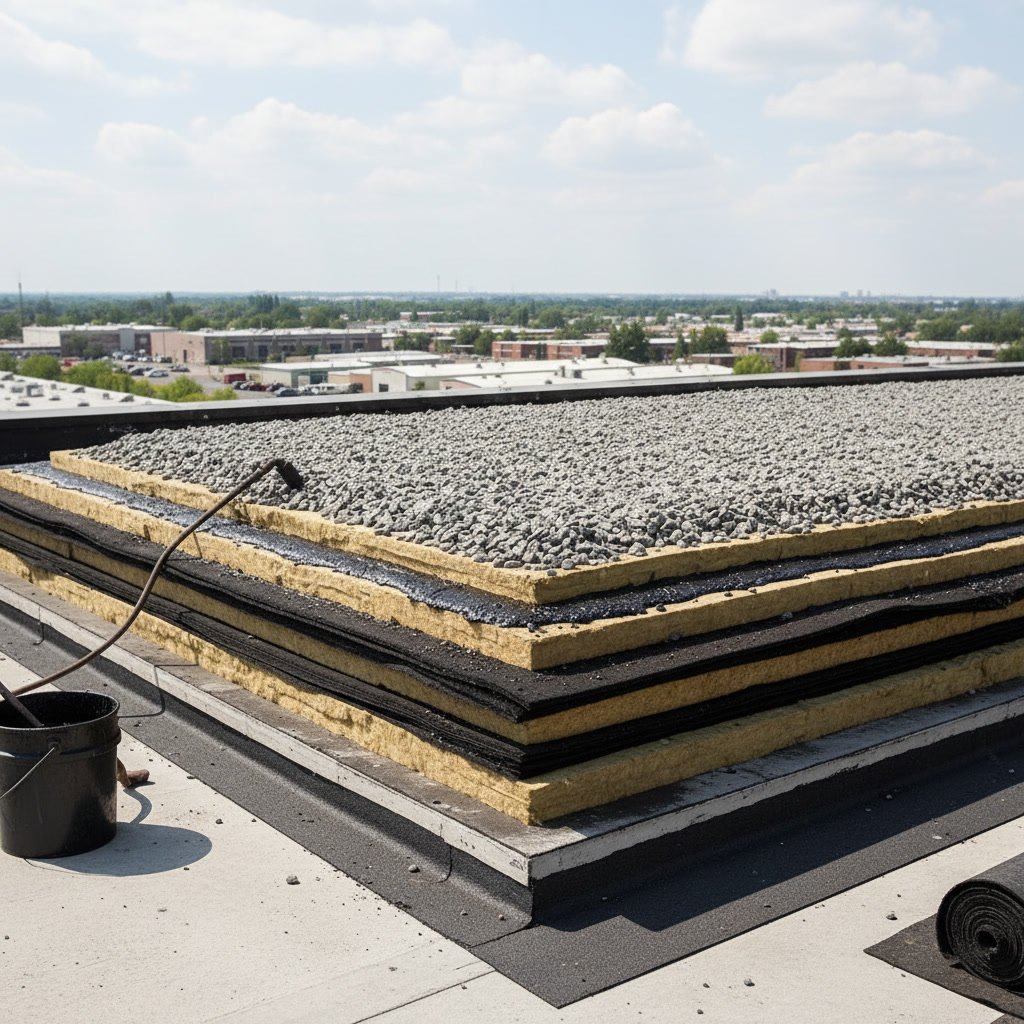
Built up roofing systems typically consist of three to five layers of reinforcing fabric embedded in hot asphalt or cold-applied adhesives. The base sheet attaches directly to the roof deck, followed by one or more ply sheets, and finished with a cap sheet or flood coat and gravel surfacing. This alternating layer pattern creates a monolithic membrane that becomes stronger as it cures.
The total thickness of a built up roof ranges from one-quarter inch to over half an inch, depending on the number of plies. This substantial thickness provides excellent puncture resistance and creates a robust barrier against water infiltration. The weight ranges from three to six pounds per square foot, which requires adequate structural support but adds ballast against wind uplift.
How Single Ply Membrane Systems Work
Single ply membranes arrive at the job site in rolls typically 10 to 20 feet wide. TPO (thermoplastic polyolefin) and PVC membranes use heat welding to join seams, creating watertight bonds stronger than the membrane itself. EPDM (ethylene propylene diene monomer) rubber membranes typically use adhesives or tape to seal overlaps, though some contractors weld EPDM as well.
These membranes range from 45 to 80 mils thick, roughly one-sixteenth of an inch. Despite the thinner profile, quality single ply systems resist punctures effectively through reinforced scrim layers embedded within the membrane. The lighter weight, typically 30 to 50 pounds per square, allows installation on structures with limited load capacity and reduces shipping costs.
Durability and Expected Lifespan Comparison
Built up roofing systems installed correctly can last 20 to 30 years, with some well-maintained installations exceeding 40 years. The multiple layers provide redundancy, and the gravel surfacing protects the waterproofing layers from UV degradation and mechanical damage. When problems develop, they typically affect localized areas rather than the entire roof system.
Single ply membranes generally offer 15 to 25 year lifespans, with TPO and PVC systems at the higher end of that range. White TPO membranes reflect sunlight effectively, reducing thermal stress and extending service life. The thinner profile means any puncture or seam failure immediately threatens the building interior, making proper installation and regular inspections critical. Quick Quote Roofing has observed that membrane failures often trace back to improper seam welding or inadequate attachment during high winds.
Installation Speed and Labor Requirements in Valrico
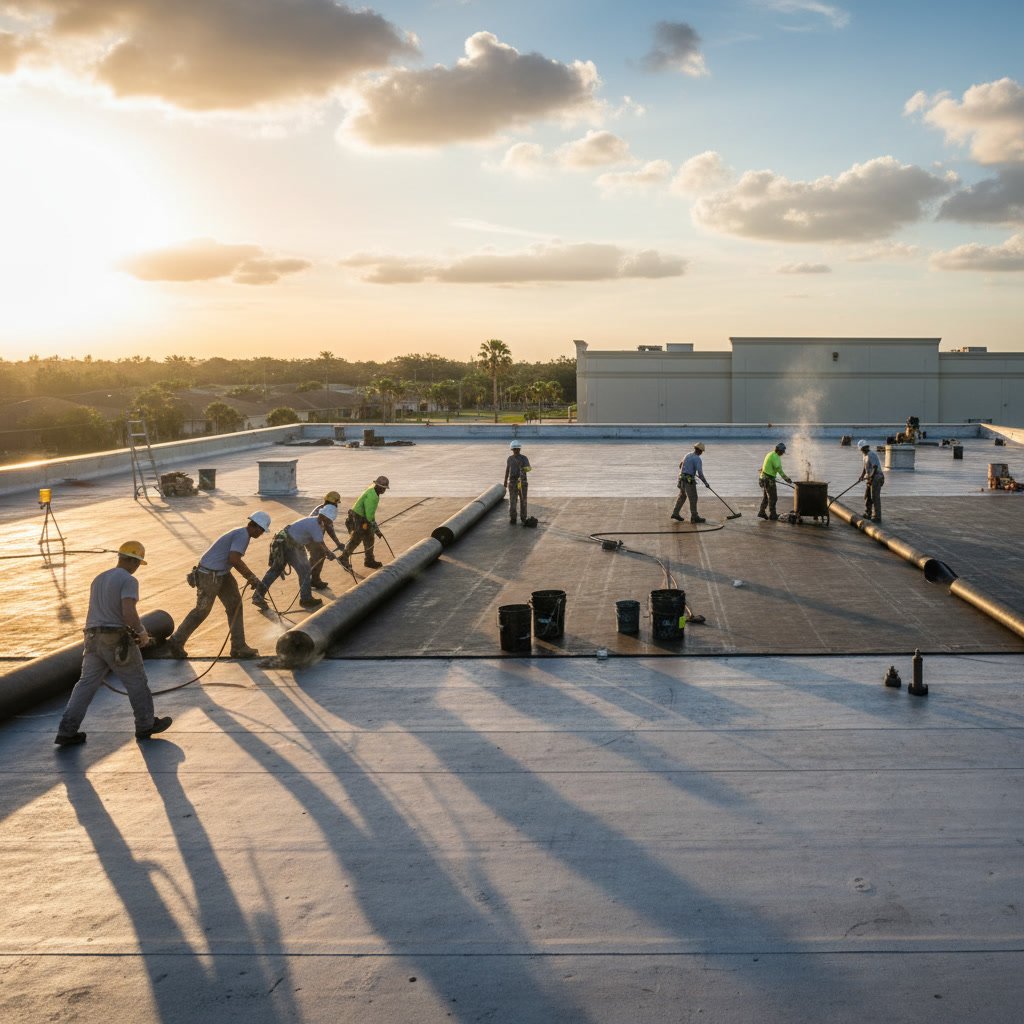
Installation time affects both project cost and business disruption. Built up roofing requires specialized equipment to heat and apply asphalt, and crews must carefully coordinate each layer application. A typical 10,000 square foot commercial roof might take five to seven days for a built up system, weather permitting. Hot weather actually helps asphalt flow and bond properly, making Florida summers ideal for this work.
Single ply installation proceeds much faster. The same 10,000 square foot roof could be completed in two to four days with an experienced crew. Mechanically attached systems install fastest, followed by fully adhered applications. The speed advantage reduces labor costs and minimizes time when the roof deck is exposed to weather. This matters significantly for occupied buildings where operations cannot pause for extended periods.
For property managers overseeing residential and commercial properties, faster installation means less tenant disruption and quicker return to normal operations.
Maintenance Demands and Repair Accessibility
Built up roofing maintenance primarily involves keeping drains clear and replenishing gravel as needed. The gravel surface protects underlying layers and can be easily repaired by adding material. When leaks develop, locating them proves challenging because water can travel between layers before entering the building. Repairs require cutting through multiple layers, patching with new materials, and ensuring proper adhesion.
Single ply systems simplify leak detection. Water typically enters at seam failures or punctures and travels directly through the membrane. Visual inspections can often identify problem areas, and repairs involve cleaning the damaged area, applying patches, and heat welding or adhering them in place. The smooth surface makes it easier to spot potential issues during routine roof inspections.
One maintenance advantage rarely discussed is that single ply membranes better accommodate rooftop equipment changes. Building owners frequently add HVAC units, solar panels, or other equipment years after initial construction. Penetrating and properly flashing through a single ply membrane proves simpler and more reliable than cutting through multiple built up layers.
Climate Considerations and Performance Under Stress
Florida’s intense UV exposure, frequent thunderstorms, and occasional hurricanes demand robust roofing systems. Built up roofing with gravel surfacing excels in hail resistance and provides excellent fire ratings. The thermal mass helps moderate temperature swings and reduces cooling loads. However, standing water accelerates deterioration of exposed bitumen areas.
White TPO and PVC membranes reflect up to 85 percent of solar radiation, significantly reducing cooling costs compared to dark built up surfaces. This reflectivity matters tremendously for large commercial buildings where roof area equals substantial square footage. The flexible nature of quality membranes allows them to expand and contract with temperature changes without cracking. Wind resistance depends entirely on proper attachment, and poorly fastened membranes can peel away during severe weather events similar to those discussed in our article about installation techniques for high wind zones.
Cost Analysis for Commercial Property Owners
Initial installation costs for built up roofing typically range from four to seven dollars per square foot, depending on the number of plies and surface treatment. Material costs remain relatively stable, but the labor-intensive process and specialized equipment increase overall expenses. The proven track record and potential 30-year lifespan spread costs over many years.
Single ply membrane systems generally cost three to six dollars per square foot installed. TPO systems typically fall at the lower end, while reinforced PVC commands premium pricing. The faster installation reduces labor costs substantially. When calculating lifetime value, consider both initial cost and expected service life. A membrane lasting 20 years at lower initial cost might match the annual cost of a built up system lasting 30 years.
Structural considerations can override simple cost comparisons. Buildings unable to support the additional weight of built up systems must use single ply membranes regardless of other factors. Conversely, buildings requiring specific fire ratings may need the proven performance of gravel-surfaced built up roofs.
Environmental Impact and Sustainability Factors
Sustainability considerations increasingly influence commercial roofing decisions. Built up roofing uses petroleum-based bitumen, a concern for environmentally conscious property owners. The multiple layers create disposal challenges when roof replacement becomes necessary, often requiring special handling and increased landfill fees. However, the longer lifespan means fewer replacement cycles over a building’s lifetime.
Single ply membranes also derive from petroleum products but use less material overall. TPO and PVC membranes can be recycled at end of life, though collection programs remain limited. The significant energy savings from reflective white surfaces reduce operating costs and environmental impact throughout the roof’s service life. Some LEED-certified projects specifically require reflective roofing to achieve energy efficiency credits.
Making the Right Choice for Your Property
The decision between these systems depends on multiple factors working together. Buildings with strong structural capacity and owners prioritizing maximum lifespan often choose built up roofing. Properties requiring immediate cost savings, faster installation, or maximum energy efficiency typically select single ply membranes. Building use matters too. Industrial facilities with frequent rooftop traffic benefit from the puncture resistance of built up systems, while office buildings rarely experience such stress.
Budget flexibility affects timing decisions. Property owners able to invest more initially for lower lifetime costs may prefer built up roofing. Those managing tight capital budgets or planning to sell within 10 to 15 years often choose single ply systems. Understanding these trade-offs requires honest assessment of your property’s specific situation and your ownership timeline.
Working with experienced contractors who install both systems ensures you receive unbiased recommendations. Our detailed guide on flat roofing materials for commercial buildings provides additional context for this important decision.
Protecting Your Commercial Investment for Decades
Both built up roofing and single ply membranes protect commercial properties effectively when properly installed and maintained. Built up systems offer proven longevity and redundancy through multiple layers, while single ply membranes provide speed, efficiency, and energy savings through lighter weight and reflective surfaces. Your choice should align with your building’s structural capacity, your budget parameters, your sustainability goals, and your expected ownership timeline.
Quick Quote Roofing installs both systems for commercial properties throughout the Tampa Bay area, bringing decades of experience to every project. Our licensed professionals help property owners evaluate their specific needs and recommend the system that delivers the best long-term value. Whether you manage a warehouse, office building, retail center, or industrial facility, the right roofing system protects your investment and supports your business operations for years to come. Contact us at +18135647603 to schedule a comprehensive evaluation and receive a detailed proposal tailored to your property’s unique requirements.