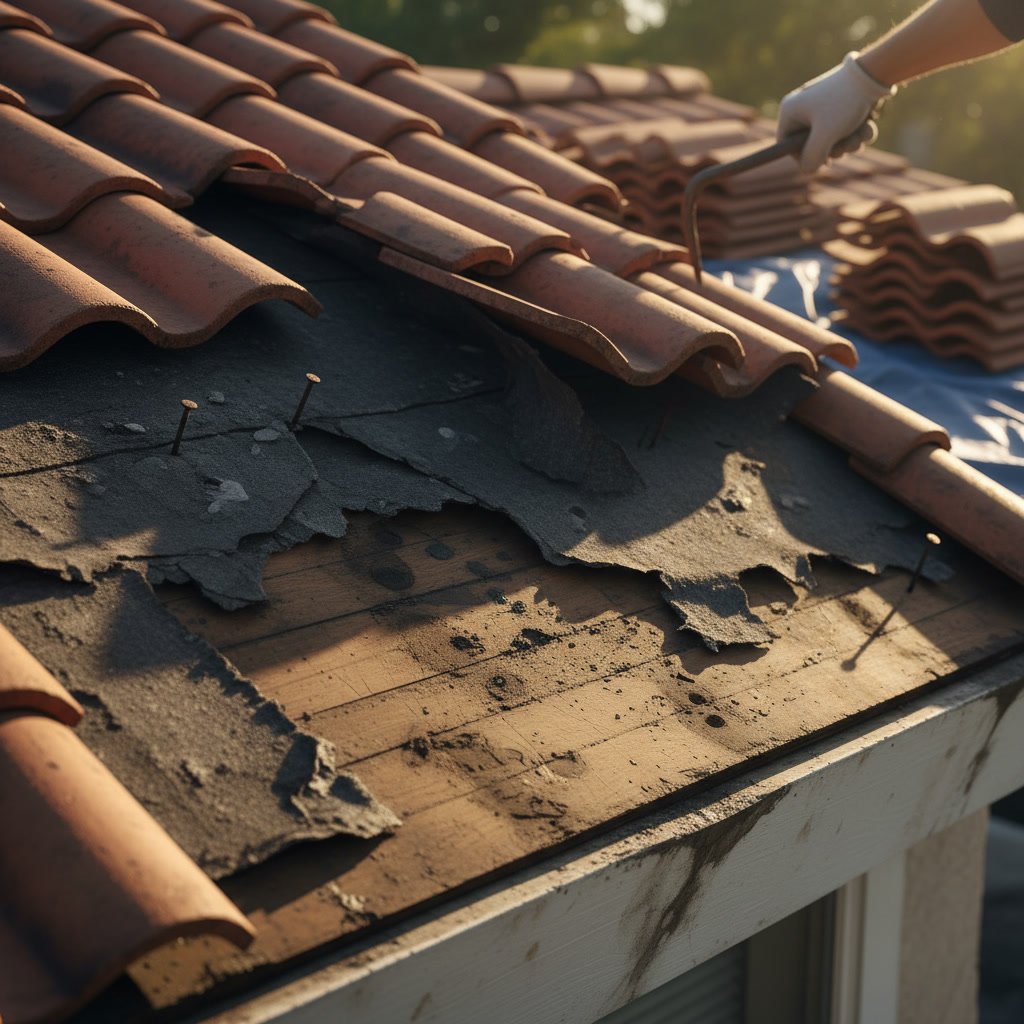
Tile roof underlayment failure happens silently beneath tiles that appear perfectly intact from ground level. The underlayment, a weatherproof barrier installed between roof decking and tiles, can deteriorate from age, moisture intrusion, or poor installation long before the tiles themselves show visible damage. When underlayment breaks down, your home loses its primary waterproof protection, leaving the roof deck and interior structure vulnerable to water damage, even when every tile remains securely in place.
This hidden degradation creates a dangerous situation for homeowners who assume their roof remains sound based solely on the appearance of the tiles. Recognizing the early warning signs allows you to address problems before they escalate into expensive structural repairs or full replacements.
Why Tile Roofs Hide Underlayment Problems
Concrete and clay tiles routinely last 50 years or longer, but the underlayment beneath them typically degrades much sooner. Most traditional felt underlayment carries a 15 to 30-year service life depending on climate conditions and installation quality. The mismatch between tile longevity and underlayment durability creates a window where the protective barrier fails while the visible roof appears flawless.
Florida’s intense sun, high humidity, and temperature swings accelerate underlayment breakdown. UV radiation penetrates gaps between tiles, weakening the material. Moisture vapor from the attic condenses on the underside during temperature shifts, promoting degradation from below. These factors work invisibly, giving homeowners no visual clue until secondary problems emerge.
Water Stains Appearing in Your Attic
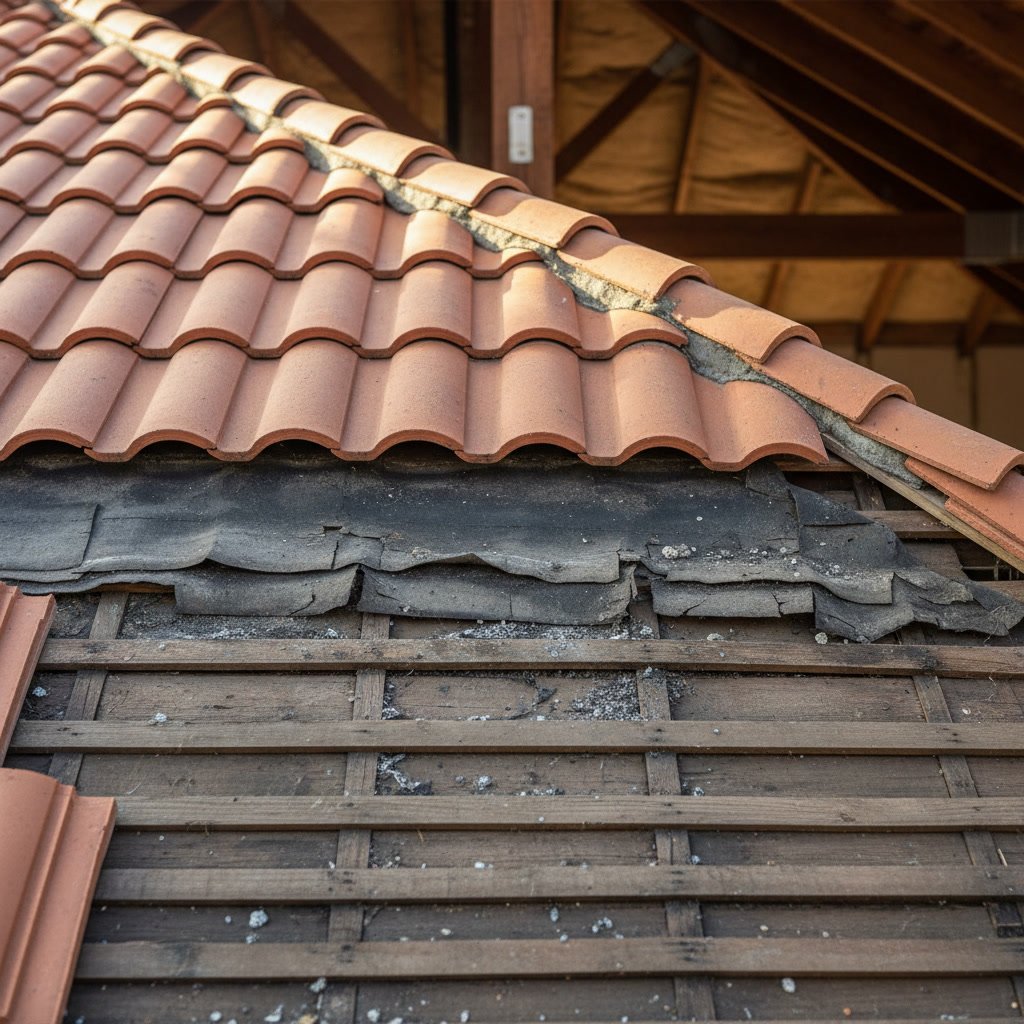
Dark streaks, discoloration, or damp spots on attic decking often signal that water bypasses the underlayment layer. These stains typically appear along roof valleys, near chimneys, or around penetrations where underlayment seams and flashing connections experience the most stress. Fresh stains indicate active leaks, while dried marks show historical water intrusion that may recur during the next storm.
Check your attic after heavy rain events, when leaks become most visible. Use a flashlight to inspect the underside of the roof deck systematically, paying special attention to areas directly beneath roof features. Water stains don’t always appear directly below the failure point, as water can travel along rafters or decking before dripping down.
Ceiling Stains Despite No Broken Tiles in Valrico Homes
When ceiling spots appear but exterior inspection reveals no cracked, shifted, or missing tiles, underlayment failure ranks as the most probable cause. The tiles remain functional as a drainage layer, but the barrier underneath no longer blocks water that seeps through tile overlaps during wind-driven rain. This scenario confuses many property owners who expect visible roof damage to accompany interior water problems.
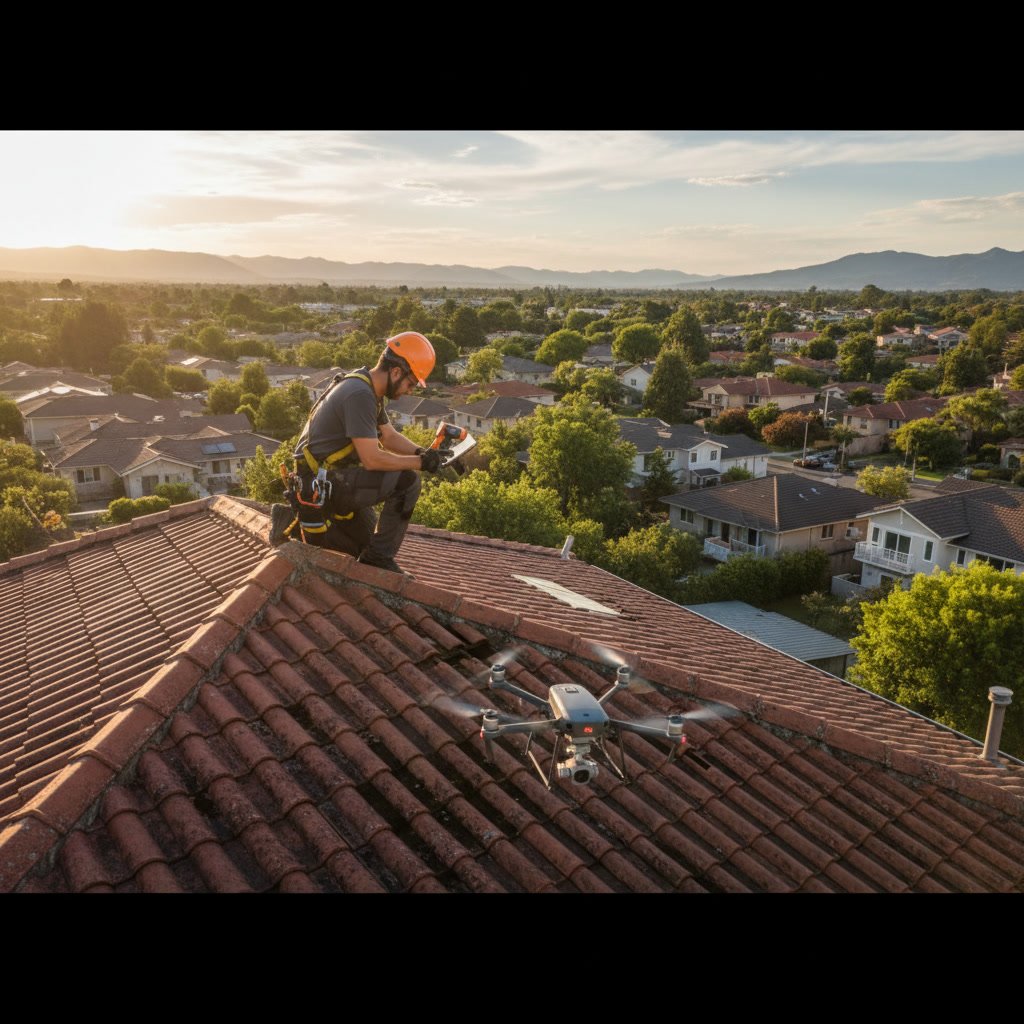
Professional roof inspections can identify this condition through infrared scanning or physical deck examination from the attic. Moisture meters detect hidden saturation in decking that visual inspection alone might miss.
Musty Odors or Increased Humidity Indoors
Failing underlayment allows moisture infiltration that doesn’t always produce visible water stains immediately. Instead, elevated humidity creates ideal conditions for mold growth within wall cavities, insulation, or attic spaces. A persistent musty smell, especially in upper floor rooms or near ceilings, often indicates chronic low-level moisture intrusion rather than catastrophic leaks.
Monitor indoor humidity levels with an inexpensive hygrometer. Readings consistently above 60 percent in climate-controlled spaces may point to hidden moisture sources. HVAC systems struggling to maintain comfort levels despite proper operation sometimes indicate that the building envelope, including the roof barrier, has been compromised.
Granules or Underlayment Fragments in Gutters
Synthetic and felt underlayment materials break down into small particles as they deteriorate. These fragments wash into gutters during rain, appearing as black grit, fabric-like pieces, or fine sediment distinct from roof tile material. While gutters naturally collect debris, underlayment fragments indicate advanced material breakdown.
Inspect gutter contents after cleaning. Underlayment debris appears different from typical organic material or tile sediment. The presence of these particles confirms that the barrier layer has begun disintegrating, though the extent of damage requires professional assessment to determine whether targeted repairs or complete underlayment replacement becomes necessary.
Age-Based Risk: The 20-Year Threshold
Roofs approaching or exceeding 20 years face dramatically higher underlayment failure risk, particularly if original installation used standard felt rather than premium synthetic products. Even in the absence of visible symptoms, proactive inspection makes financial sense at this age benchmark. Early detection allows planned replacement on your timeline rather than emergency response during a leak crisis.
Documentation from original installation helps establish the underlayment type and expected service life. Homes with unknown roof history benefit from exploratory inspection, where a few tiles are carefully removed to directly examine barrier condition. This minimal-disruption process provides definitive answers about remaining service life and helps prioritize maintenance budgets.
Understanding roof replacement cost factors helps you plan financially for eventual underlayment renewal, whether performed in conjunction with full roof replacement or as an isolated re-decking project.
Visible Sagging Between Roof Rafters
When underlayment absorbs water repeatedly, it gains weight and loses structural integrity. This combination causes the material to sag between roof framing members, creating visible depressions when viewed from the attic. Sagging indicates both current moisture problems and advanced material degradation that requires immediate attention.
Deck sagging sometimes accompanies underlayment failure when prolonged moisture exposure rots the wooden sheathing. This dual failure scenario requires more extensive repair than simple underlayment replacement. Structural assessment determines whether sheathing replacement, rafter reinforcement, or other framing work becomes necessary alongside barrier renewal.
Comparing Underlayment Types and Failure Patterns
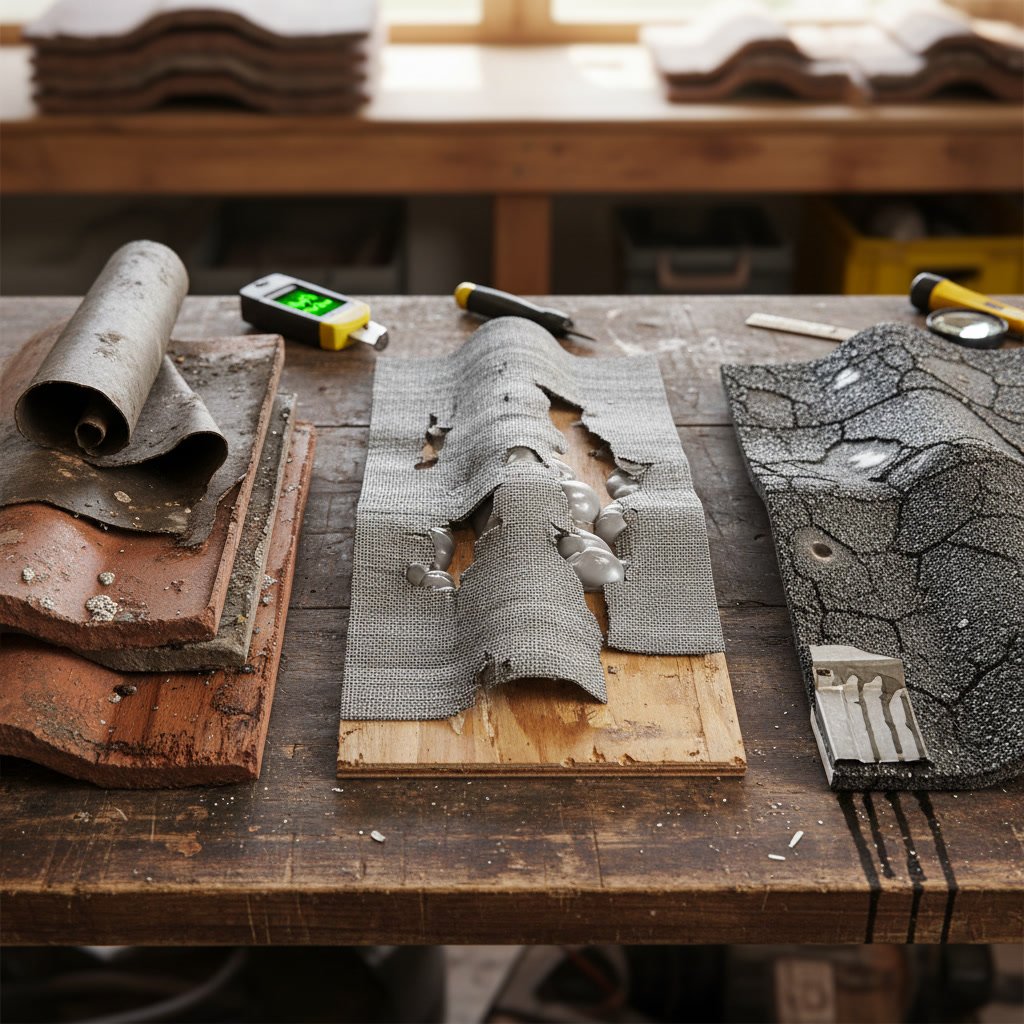
Different underlayment materials exhibit distinct failure modes. Traditional 30-pound felt tears and develops holes as it dries out and becomes brittle. Synthetic products like polypropylene typically degrade along seams and fastener points first, maintaining general integrity longer but failing catastrophically once breakdown begins. Peel-and-stick membranes lose adhesion, creating channels where water penetrates.
Felt underlayment shows gradual, progressive failure with increasing leak frequency over time. Synthetic materials often maintain waterproofing until sudden failure occurs, making age-based replacement even more critical for these products. Understanding which product protects your home helps predict failure timing and plan appropriate inspection intervals.
Modern tile roofing installations increasingly use high-performance synthetic underlayments rated for 30 to 50 years, closely matching tile longevity and reducing the hidden failure problem. Homes with older installations face higher risk from this material mismatch.
Ice Damming in Unexpected Areas
While less common in Florida than northern climates, localized ice formation can occur during rare freeze events when failing underlayment allows warm interior air to reach the roof deck. This temperature differential creates conditions for ice accumulation in specific zones rather than uniform roof coverage. The pattern of ice formation often maps directly to underlayment compromise areas.
After cold weather events, inspect for unusual ice patterns or areas where ice persists longer than surrounding sections. These thermal signatures reveal where the building envelope has been breached, allowing conditioned air to escape through the roof assembly.
The Inspection Process That Reveals Hidden Damage
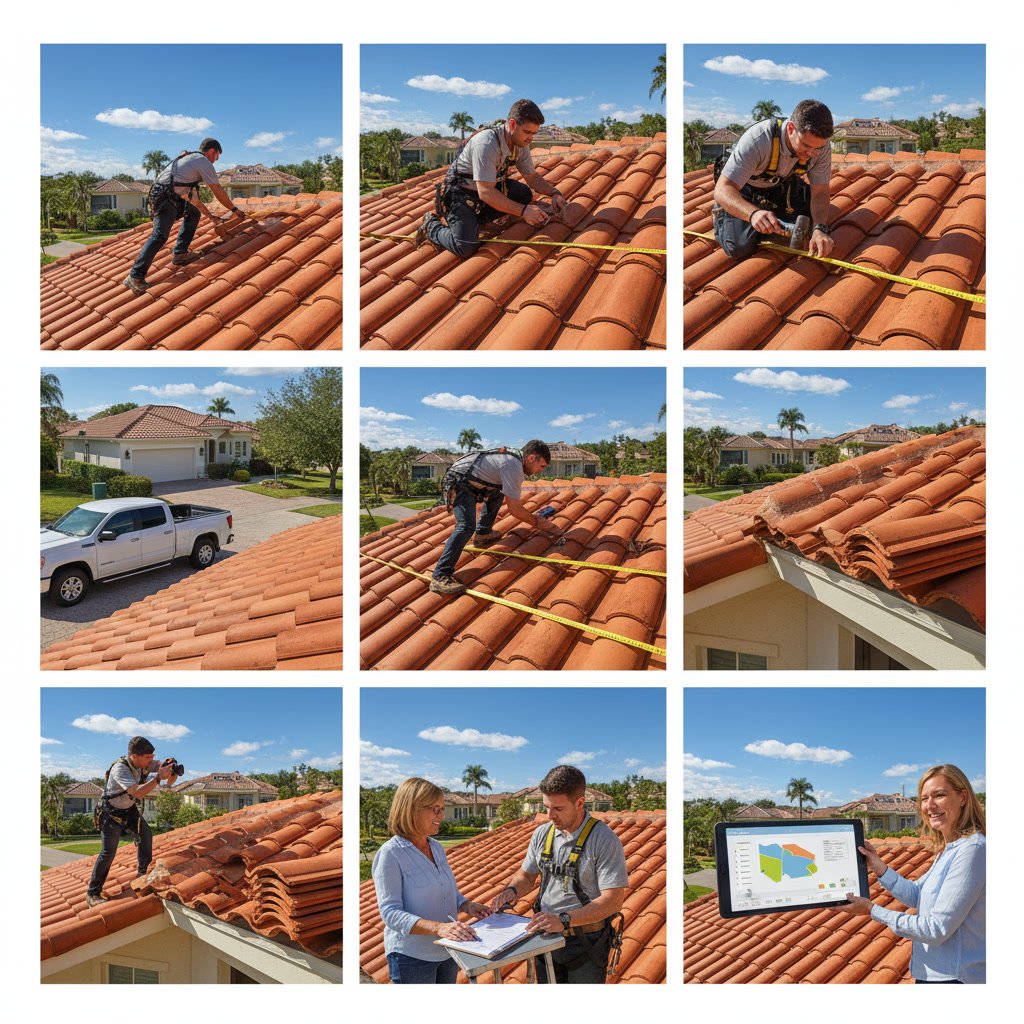
Professional roof evaluation for underlayment condition involves multiple diagnostic approaches. Thermal imaging from inside the attic reveals temperature variations that indicate moisture presence or missing insulation effectiveness. Physical examination requires removing selected tiles at strategic locations to directly observe barrier condition, checking for brittleness, tears, or loss of waterproofing properties.
Moisture meters measure water content in decking, distinguishing between current leaks and residual dampness from resolved issues. Comprehensive inspection also evaluates flashing integrity, ventilation adequacy, and tile attachment security. These factors work together to determine overall roof health and establish whether roof repair addresses the problem or complete underlayment replacement becomes necessary.
Experienced contractors understand the relationship between installation techniques and underlayment longevity, similar to how roofing contractors adapt installation techniques for high wind zones to ensure long-term performance under stress conditions.
Protecting Your Investment Before Damage Spreads
Addressing underlayment failure early prevents cascading problems that multiply repair costs. Water infiltration quickly damages decking, insulation, framing, and interior finishes. Mold remediation alone can cost thousands of dollars, while structural wood replacement adds substantial expense beyond simple underlayment renewal. Early intervention when you first notice warning signs keeps repairs manageable and protects home value.
Quick Quote Roofing provides thorough evaluations that identify underlayment condition before minor issues escalate into major damage. Insurance policies typically cover sudden failures but exclude gradual deterioration from deferred maintenance, making timely inspection financially prudent. Documented professional assessments also establish baseline conditions useful for insurance claims if storm damage occurs.
If you notice water stains, musty odors, or other warning signs discussed here, schedule a professional inspection to determine underlayment condition and remaining service life. Quick Quote Roofing serves homeowners throughout the Brandon area with detailed assessments and transparent repair recommendations. Contact our team at +18135647603 to arrange an evaluation of your tile roof’s hidden protective barrier.